
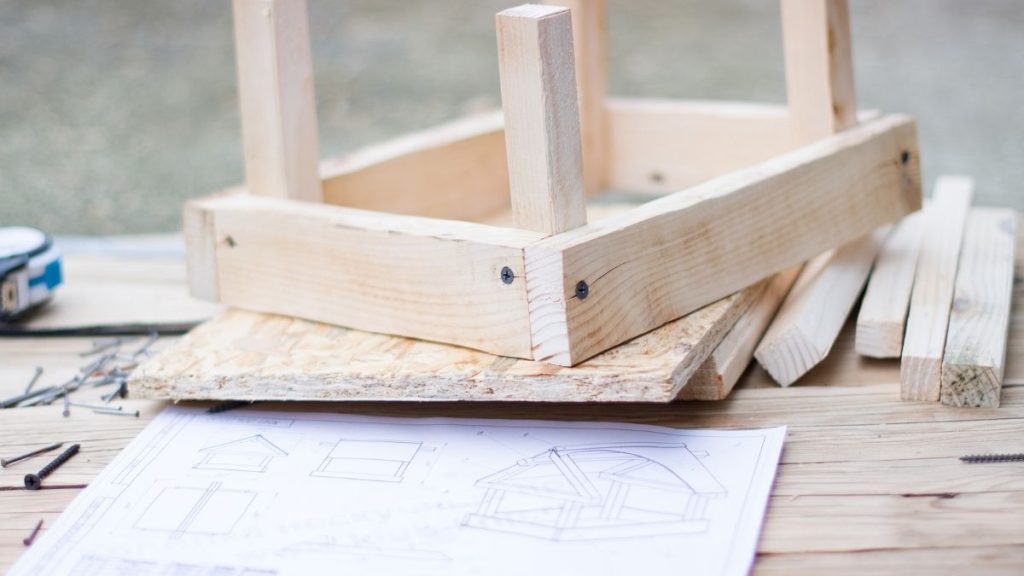
A birdhouse only works if the birds you want can actually use it. Entrance hole size, floor space, and inside depth decide who moves in.
Get them wrong and the box sits empty, or invasive sparrows take it over. The free bird house plans below give you exact measurements for 25 species, all drawn from the Cornell Lab of Ornithology’s Right Bird, Right House nest box tool.
Start with the species that already live near you, match their specs, and follow the build steps. Most of these plans call for only a saw, a drill, and a screwdriver.
That makes a simple birdhouse a great weekend DIY project and a fun family project for kids who want to watch a nest up close.
What Makes a Good Birdhouse
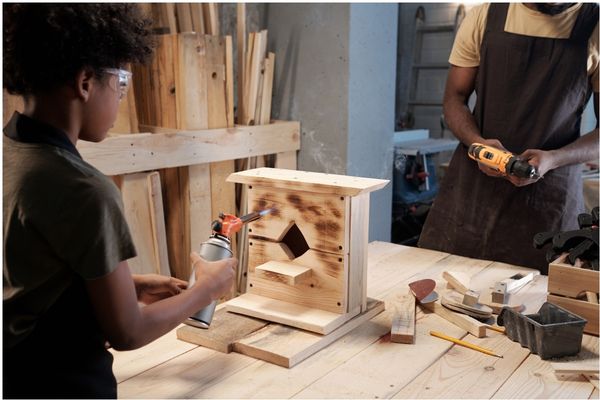
Use untreated, unpainted pine, cedar, or fir with walls at least 3/4 inch thick. Add a sloped roof, drainage holes, ventilation holes, and a side or roof that opens for cleaning.
Skip the outside perch. It looks charming, but nesting pairs don’t need it, and it gives predators a handhold.
A modern birdhouse with clean lines can work just as well as a rustic one, as long as it meets these basics. Many decorative bird houses sold as garden accents do not.
Get the Bird House Hole Size Right
The entrance hole works like a filter. A 1 1/8-inch chickadee hole is small enough to keep house sparrows out, and restricting hole size alone keeps starlings away from smaller species.
Drill with a spade or Forstner bit sized exactly to the plan.
How to Build a Birdhouse Step by Step
Every birdhouse plan below follows the same basic build. Only the measurements change between plans.
Step 1: Pick your species. Check which species nest in your region and habitat, then pull the matching specs below. Bluebirds need open grass, while chickadees want mature trees, so the right box has to go in the right place.
Step 2: Cut the panels. Lumber sold as 1-inch is actually 3/4 inch thick, so plan around that. Cut the floor to the interior size listed, and add 1 1/2 inches to any panel that wraps around both side walls.
Step 3: Drill the holes. Bore the entrance to the exact diameter listed. Add at least four drainage holes, 3/8 to 1/2 inch wide, in the floor. Then drill two 5/8-inch vent holes near the top of each side wall.
Step 4: Rough up the inside. Groove or roughen the inside of the front panel below the hole. Nestlings use these grooves to climb out when they’re ready to fledge.
Step 5: Assemble with galvanized screws. Screws seal better than nails, which loosen over time, and they come out easily for repairs. Recess the floor at least 1/4 inch up from the bottom so the nest stays dry. Hinge one side or the roof so you can open the box.
Step 6: Add the roof. Let it overhang the front by 2 to 4 inches and the sides by 2 inches to block driving rain. A compound miter saw for angled roof cuts makes the sloped joints easy.
Step 7: Mount it on a pole with a baffle. You’re going to want to do free-standing metal poles or PVC pipe over trees or a fence post, which raccoons and cats climb easily. Add a cone baffle about 3 feet across or a stovepipe baffle 8 inches wide and 24 to 36 inches long. Install boxes by February in the South and by mid to late March up north, and keep them away from yards where pesticides are sprayed.
All measurements in the plans below are inside dimensions. Height means distance from the ground, and spacing means the minimum distance between boxes for the same species.
Bluebird and Swallow House Plans
1. Eastern Bluebird House
Bluebirds hunt insects over short grass, so set this bluebird house in an open field or lawn with the hole facing east. Hole: 1 1/2″ round, or a 2 1/4″-tall by 1 3/8″-wide oval. Floor: 5 1/2″ x 5 1/2″. Depth: 9″. Height: 4–6 ft. Spacing: 300 ft. If sparrows move in, we recommend drilling a second, identical hole beside the first so bluebirds can better defend the box.
2. Western Bluebird House
This box uses the same footprint as the eastern version. Face it east into an open area, or south if it sits in full sun. Hole: 1 1/2″. Floor: 5 1/2″ x 5 1/2″. Depth: 9″. Height: 4–6 ft. Spacing: 215 ft. Clean out old nests right after a brood leaves so the pair can try again.
3. Mountain Bluebird House
Mountain bluebirds need a slightly larger hole than their cousins. Hole: 1 9/16″. Floor: 5 1/2″ x 5 1/2″. Depth: 9″. Height: 4–6 ft. Spacing: 300 ft, facing east. Keep boxes at least a quarter mile from buildings to avoid sparrows, and skip utility poles, which give hunting kestrels a perch.
4. Tree Swallow House
Tree swallows do best near water with tall, unmowed grass. Hole: 1 3/8″. Floor: 5 1/2″ x 5 1/2″. Depth: 9″. Height: 5–6 ft. Spacing: 35 ft, facing south or east. Cut shallow horizontal kerfs below the hole as a fledgling ladder. If swallows and bluebirds compete, add a second box 20 to 25 feet away.
5. Violet-green Swallow House
This western swallow nests in mountains and open woodland. Hole: 1 3/8″. Floor: 5 1/2″ x 5 1/2″. Depth: 9″. Height: 9–15 ft. Spacing: 30 ft, facing south or east. Add a fledgling ladder and a predator guard. Violet-green swallows line their nests with feathers, so offering clean chicken feathers nearby can help.
Chickadee, Titmouse, and Nuthatch Plans
6. Black-capped Chickadee House
Chickadees like to excavate, so place 1 inch of wood shavings on the floor. Hole: 1 1/8″. Floor: 5 1/2″ x 5 1/2″. Depth: 8″. Height: 5–15 ft. Spacing: 650 ft. Face the hole away from the prevailing wind in a yard or woodlot with mature trees.
7. Carolina Chickadee House
The southern counterpart to the black-capped uses the same box. Hole: 1 1/8″. Floor: 5 1/2″ x 5 1/2″. Depth: 8″. Height: 4–15 ft. Spacing: 30 ft, any direction. This species does little excavating, so you can skip the wood shavings.
8. Tufted Titmouse House
Titmice favor forests, parks, and neighborhoods with large deciduous trees. Hole: 1 1/4″. Floor: 5 1/2″ x 5 1/2″. Depth: 8″. Height: 5–15 ft. Spacing: 580 ft. Point the entrance away from the prevailing wind.
9. White-breasted Nuthatch House
This nuthatch uses boxes only occasionally, mostly in wooded areas that lack natural cavities. Hole: 1 1/4″. Floor: 5 1/2″ x 5 1/2″. Depth: 8″. Height: 5–20 ft. Spacing: 1,040 ft, facing south. Add 1 inch of shavings, and leave the box up in winter since nuthatches may roost in it.
10. Red-breasted Nuthatch House
These nuthatches live in mature conifer forests and usually dig their own cavities. Hole: 1 1/4″. Floor: 5 1/2″ x 5 1/2″. Depth: 8″. Height: 5–15 ft. Spacing: 150 ft. A box works best where dead trees are scarce. Don’t be surprised to see sticky conifer resin smeared around the entrance.
Wren, Warbler, and Flycatcher Plans
11. House Wren House
Place this box within 100 feet of shrubs or trees, with clear flying space around the hole. Hole: 1″. Floor: 5 1/2″ x 5 1/2″. Depth: 8″. Height: 5–10 ft. Spacing: 100 ft, any direction. House wrens may destroy the eggs of nearby cavity nesters, so keep boxes for other species at least 100 feet away.
12. Carolina Wren House
We rate this plan kid-friendly. It’s a semi-open box that mimics the sheltered nooks these wrens love. Opening: 2 1/2″. Floor: 5″ x 6 1/2″. Depth: 7″. Height: 3–6 ft. Spacing: 330 ft. Mount it on a building and leave it up all winter for roosting.
13. Prothonotary Warbler House
This golden bird is one of only two warblers in NestWatch’s plan library. Hole: 1 1/4″. Floor: 5 1/2″ x 5 1/2″. Depth: 8″. Height: 4–12 ft. Spacing: 235 ft, facing water. Set the box within 16 feet of standing or slow water, or over water at 3 to 5 feet above the high-water line. Always add a predator guard.
14. Great Crested Flycatcher House
Place this roomier birdhouse along a woodland edge. Hole: 1 3/4″. Floor: 8″ x 7″. Depth: 9″. Height: 3–20 ft. Spacing: one box per 6 acres. These flycatchers seem to prefer hanging boxes, so try a 3- to 4-foot wire from a limb about 12 feet up. Hanging also discourages starlings.
15. Ash-throated Flycatcher House
This western flycatcher shares the same plans and box size. Hole: 1 3/4″. Floor: 8″ x 7″. Depth: 9″. Height: 3–20 ft. Spacing: 200 ft, facing southeast. Good spots include chaparral, oak scrub, mesquite thickets, desert, and streamside woodland.
Woodpecker, Owl, and Kestrel Nest Box Plans
16. Northern Flicker House
Flickers are woodpeckers, so they want to dig. Our specs call for 1 1/2-inch-thick boards and a box packed full of white pine chips. Hole: 2 1/2″. Floor: 7 1/4″ x 7 1/4″. Depth: 24″. Height: 6–12 ft. Spacing: 330 ft, facing south or east. Cut 1/4-inch-deep kerfs every 1/2 inch inside so chicks can climb.
17. Pileated Woodpecker House
This is the biggest woodpecker box on the list. Hole: 4″. Floor: 11 1/4″ x 11 1/4″. Depth: 24″. Height: 15–20 ft. Spacing: 330 ft. Pack it full of tamped sawdust and hang it deep in mature hardwood forest. Use is rare, but it helps where large dead trees are missing.
18. Eastern Screech-Owl House
Screech-owls are one of the easiest owls to attract to a backyard box. Hole: 3″. Floor: 9 5/8″ x 11 1/4″. Depth: 17 3/8″. Height: 10–30 ft. Spacing: 100 ft. Mount it under a limb at the woodland edge on a tree at least as wide as the box, and add 2 to 3 inches of shavings.
19. Northern Saw-whet Owl House
This tiny owl uses the same box as the screech-owl. Hole: 3″. Floor: 9 5/8″ x 11 1/4″. Depth: 17 3/8″. Height: 12–15 ft. Spacing: 800 ft, facing south. Choose conifer forest near water. If you find a nest, wait at least a week before checking it, since early disturbance can cause abandonment.
20. American Kestrel House
North America’s smallest falcon uses the same owl-size box. Hole: 3″. Floor: 9 5/8″ x 11 1/4″. Depth: 17 3/8″. Height: 10–30 ft. Spacing: half a mile, facing south or east. Mount it on a lone tree in a field, at a woodlot edge, or on a farm building.
21. Barn Owl House
We rate the Barn Owl nest box plan complex. Hole: 3 3/4″ x 4 1/2″ oval. Floor: 12 3/8″ x 22 3/4″. Depth: 16″. Height: 8–25 ft. Spacing: 100 ft. Place it in a barn, silo, or on a pole near open fields. Hungry owlets are loud, so keep it well away from your house.
Duck, Martin, and Open-Nest Plans
22. Wood Duck House
Wood ducks nest in cavities near water. Hole: 3″ high x 4″ wide. Floor: 8″ x 9 1/4″. Depth: 24″. Height: 6–30 ft. Spacing: 600 ft, facing water. Add 4 inches of shavings and a strip of 1/4-inch hardware cloth under the hole so ducklings can climb out. Over water, mount it at least 3 feet above the high-water mark with a predator guard.
23. Purple Martin Birdhouse
Martins nest in colonies, using multi-room houses (more common in the East) or hollow gourds hung close together (more common in the West). Hole: 2 1/8″ round or a 3″-wide by 1 3/16″-high crescent. Height: 10–15 ft. Spacing: 10 ft between units. Paint the outside white but not the inside, and keep 40 to 60 feet clear of trees and buildings. Use a pole you can lower for cleaning.
24. American Robin Nesting Shelf
Robins won’t use an enclosed box, but they will use an open shelf. Height: 5–25 ft. Spacing: 65 ft. Mount it under the eaves, beneath a soffit, or over a light fixture, and remove the old nest once the young fledge.
25. Mourning Dove Nest Cone
Doves build flimsy nests, and a wire cone gives them a sturdy base. This is another kid-friendly plan. Height: 6–10 ft. Spacing: one cone per 2.5 acres. Wire the cone into a horizontal fork of a shady tree limb with branches overhead. Doves may nest two or three times in a row in the same spot.
Tips for Keeping Birds Coming Back
Check your boxes once or twice a week during nesting season, which won’t hurt nesting success. Clean out bluebird boxes after each brood so the pair can nest again. Tree swallows usually raise one brood, so clean their box when they finish and another species may move in.
If you also run bird feeders, skip cheap seed mixes loaded with millet, cracked corn, and milo, which draw sparrows.
Safflower and nyjer are better choices for keeping your neighborhood birds balanced. Bird feeder plans are a separate build, but the same rule applies: design for the species you want.
One common question is whether hummingbirds will use a birdhouse. They won’t. Hummingbirds build tiny cup nests on branches, so native flowers and shrubs do far more for them than any nest box.
Pick one birdhouse plan, build it this weekend, and give your feathered friends a safe habitat home.
Once it’s occupied, you can share what you see with NestWatch’s nest monitoring project and help scientist